Turning a technical milestone into an industry-wide campaign
Summary
Boundless was preparing an important technical milestone that could make transactions between blockchain networks safer and less expensive. I turned it into The Signal, a five-week campaign that gave respected researchers, partner companies, developers, and people supplying computing power a role in bringing the work to life. I developed the idea, secured partner support, designed how each audience could participate, and led the rollout across engineering, developer relations, and creative.
- The campaign generated 30M+ social impressions and reached more than 2,000 GPU operators, giving a niche technical launch both attention and real participation
- Industry partners contributed $1.6M to keep The Signal running, with the money paying GPU operators to do the underlying work
- The momentum carried into Boundless's next fundraise, where a $13M round attracted $74M in demand
Finding the larger story inside an engineering milestone
At the time, Boundless was a cloud platform that generated zero-knowledge proofs, cryptographic receipts that help blockchain networks verify work more efficiently. The engineering team came to me with what they believed would be our biggest technical moment of the year: generating proofs of Ethereum consensus, the process that keeps Ethereum's transaction record in agreement.
Developers could use the proofs to reduce bridging costs and improve the security of cross-chain transactions across the Ethereum ecosystem, though the achievement was still extremely niche. A technically accurate announcement would have been meaningful to a small group of specialists and easy for the rest of the market to ignore.
I had seen this pattern before, with engineering describing the mechanism while the market cared about what became possible. I kept the technical substance intact and looked for a consequence that more people could understand and help bring to life.
Give more audiences a way into the story
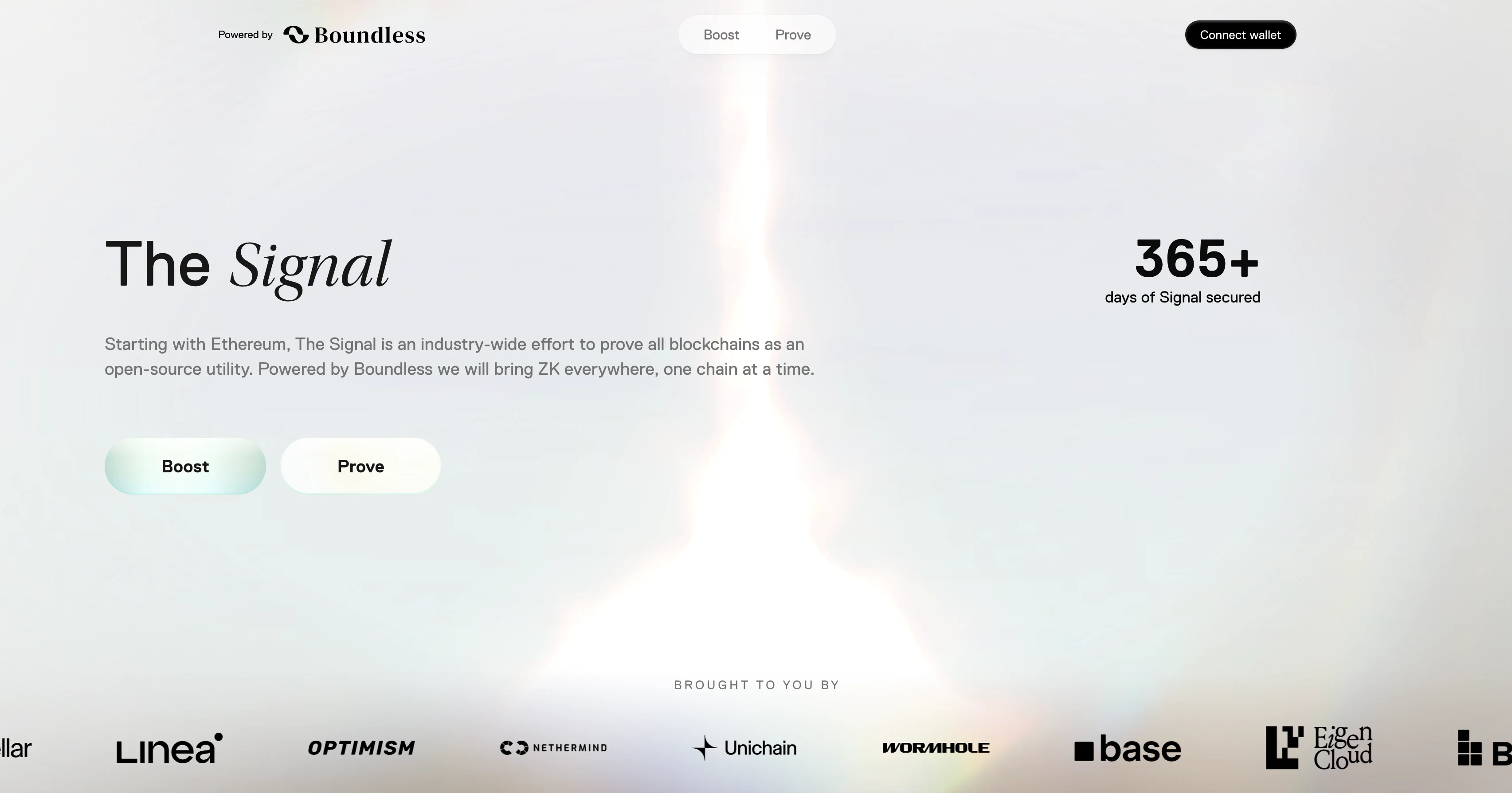
I called the campaign The Signal. Boundless would publicly broadcast proofs of Ethereum for developers to use in their own workflows. The name translated an abstract engineering process into an image people could quickly understand and remember.
The name also let us treat the milestone as a public resource developers could use. We started with Ethereum, with the longer-term ambition of proving other blockchain networks one at a time.
From there, I gave each audience a practical role. Researchers and technical leaders could validate the work; ecosystem companies could support it and put the proofs to use; and developers could bring the proofs into their workflows. GPU operators, also called provers, supplied the computing power, while the broader community could learn, fund proof requests, and help share the story. The Signal gave each group a reason to take part.
Earn validation through meaningful participation
Boundless had deep product knowledge, while researchers, technical leaders, and established ecosystem companies carried trust that we had not earned yet. I began with people whose technical judgment already mattered to the market.
I asked researchers and technical teams to help shape an Ethereum milestone that had never been achieved before. Boundless handled the engineering, while participating organizations provided advice, amplified the effort publicly, and aligned their teams with the campaign. We recognized them as part of the group making it possible.
Their support took several forms. Technical advice helped shape the work, public alignment put their reputations behind it, and industry donations funded the proof requests that kept The Signal live. That money flowed to GPU operators for the compute required to generate the proofs, turning outside support into working infrastructure.
Giving GPU operators a reason to join
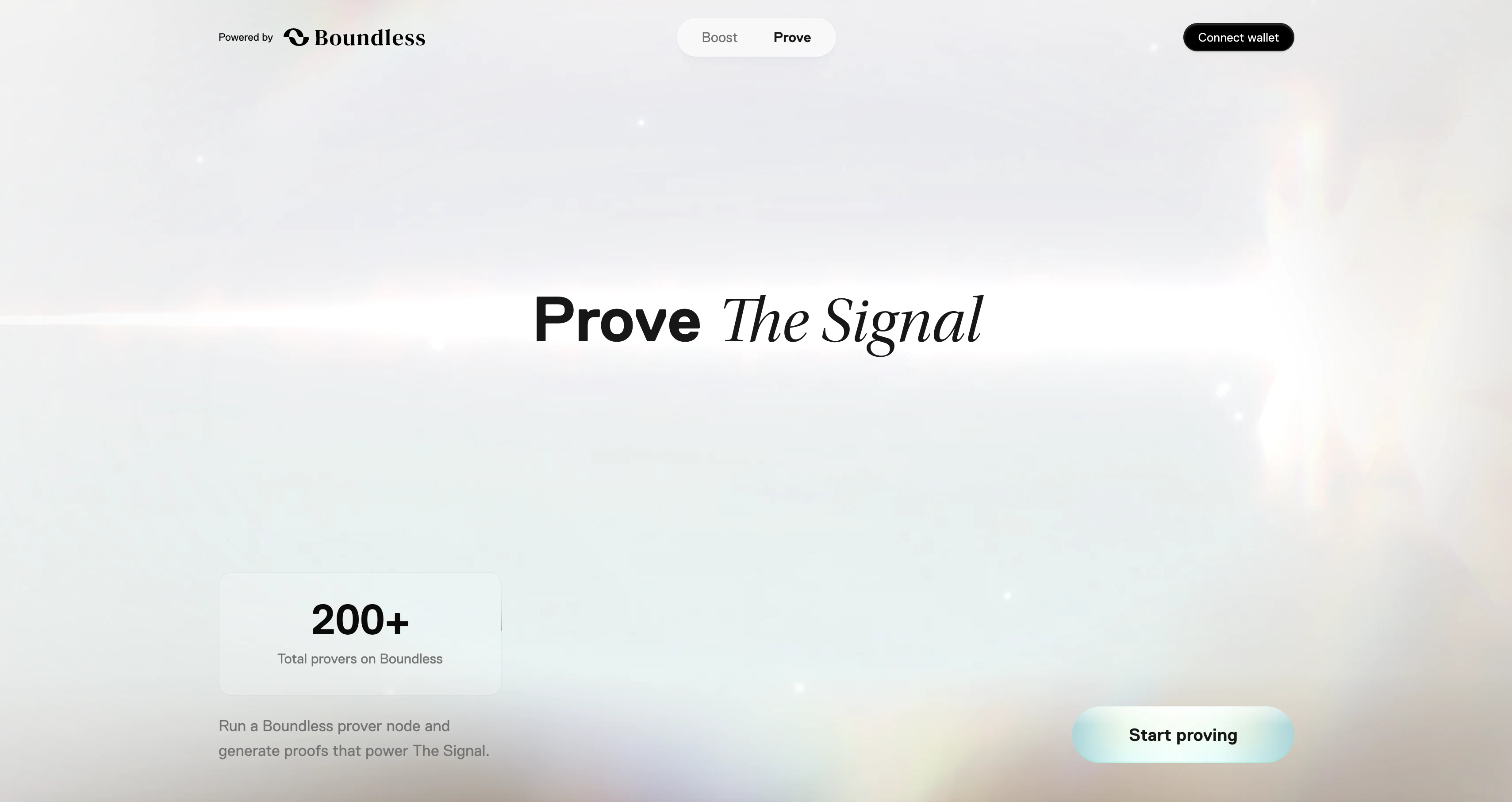
Across the campaign, industry participants donated $1.6 million to help keep The Signal live. Those contributions paid for proof generation, with the funds going to GPU operators who supplied the compute. Prove The Signal organized that demand into an incentivized competition and gave operators a direct reason to connect hardware to the network.
The program reached more than 2,000 GPU operators and represented compute capacity equivalent to more than 10,000 RTX 5090s. Participation expanded beyond hobbyist machines to data-center-scale operators around the world.
The competition brought the computing power the product needed onto the network. GPU operators made each proof request possible by supplying the hardware behind it.
Giving the wider market a way to participate
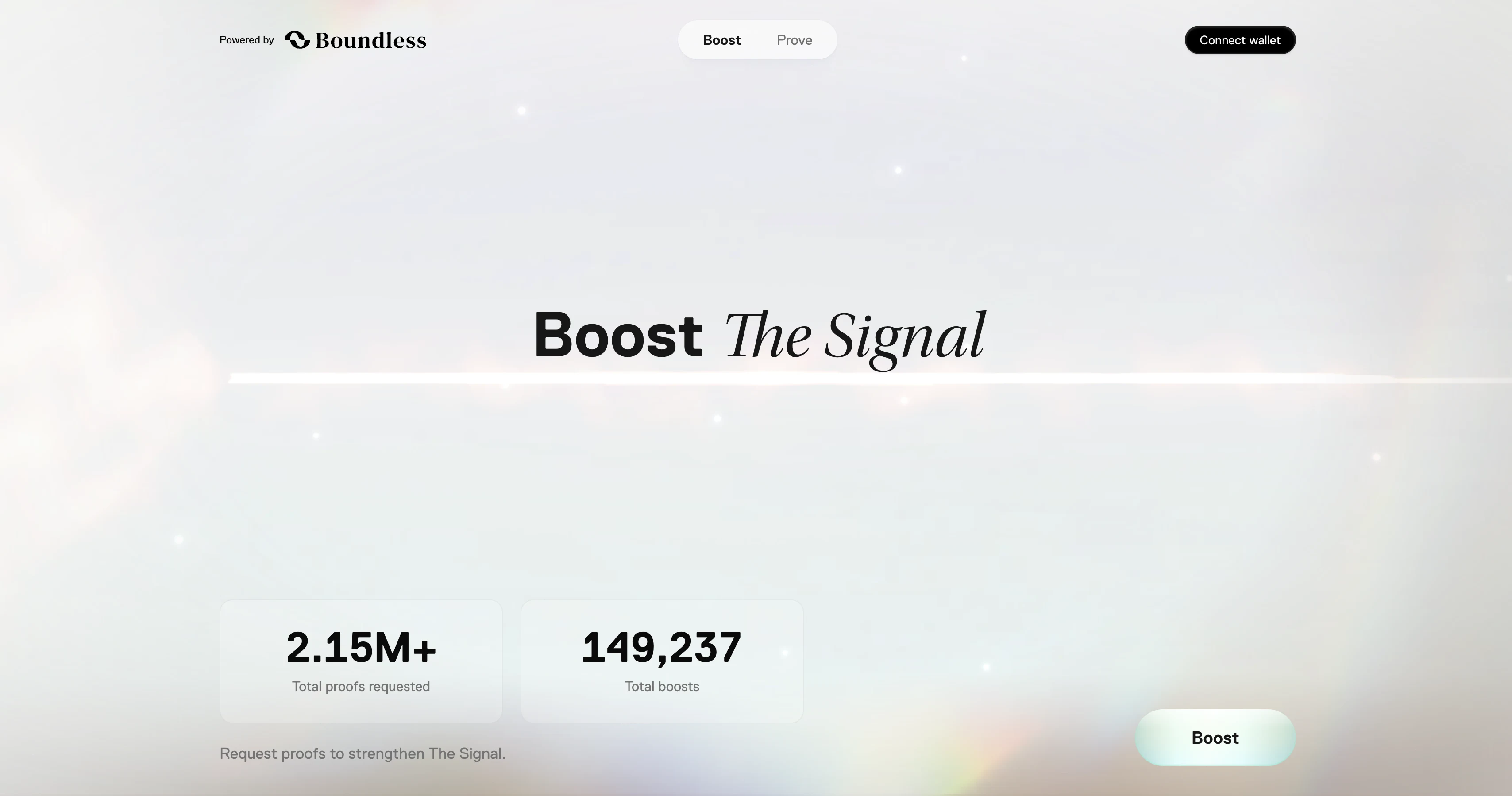
The broader community encountered the campaign after credible third parties had already put their expertise, reputations, and money behind it. That support reduced the uncertainty of engaging with an unfamiliar technical product. Boost The Signal gave people an accessible way to learn about the effort, request proofs, contribute toward live proof generation, and amplify the story.
The interface made progress visible and gave people a concrete action beyond reposting an announcement. Each boost helped make the campaign more visible while contributing toward the proof requests GPU operators were completing.
As more people contributed, we could fund more proof requests. That created work for GPU operators and gave future partners evidence that Boundless could keep the service running. Sharing that progress publicly gave participants a reason to keep following and amplifying the campaign.
Sprinkle proof points through the campaign
Repeating The Signal's ambition for five weeks would have made the campaign feel hollow. I used ecosystem announcements throughout the rollout to show that serious infrastructure teams were committing resources and finding practical uses for Boundless.
Cysic bringing its GPU capacity to the network showed that established compute providers were willing to support proof generation at scale. The Celestia announcement made the developer utility more concrete by showing how the infrastructure could support another important ecosystem.
Each announcement gave the market something concrete to see beyond our own claims. They helped us sustain attention without asking people to believe the same message again and again.
Pair inspiration with instruction
The Signal gave people a reason to pay attention, and technical tutorials showed them what to do next. Our developer relations team created practical guides that walked GPU operators through connecting hardware to the Boundless network.
The tutorials translated the campaign into an immediate technical workflow and reduced the distance between hearing The Signal story and helping generate its proofs.
Across the five weeks, we alternated between the larger ambition, new ecosystem commitments, and practical instructions. A partnership could demonstrate market pull, and a tutorial could help an operator connect hardware the same day.
What changed over five weeks
Across five weeks, The Signal generated more than 30 million social impressions, reached more than 2,000 GPU operators, and secured $1.6 million in industry donations to fund the proofs and compensate the operators generating them. A subsequent $13 million round attracted $74 million in demand. The campaign contributed to that momentum, though no single campaign can claim sole credit for a financing outcome.
The order mattered. Researchers and partners made the wider market more comfortable participating. Contributions funded proof requests, GPU operators supplied the computing power, and the resulting proofs gave future companies evidence that Boundless could deliver what we had promised.
If I ran a similar campaign again, I would look for the larger consequence inside the technical work, give every audience a useful role, and publish enough concrete proof for the market to see the product working. That approach helped Boundless earn attention while doing the infrastructure work we had promised.